Water leak detection for letting agents and rented homes
ADI’s engineers find hidden leaks with tracer gas, acoustics and thermal imaging. We work around your tenant and give you a report to pass to the landlord and the insurer.
Explore a house split into two flats: the bathroom over the flat below, the boiler, the kitchen, the pipes under the floor and the supply from the pavement.
Loft, roof and gutters
What the tenant notices. A stain on the top-floor ceiling after heavy rain, damp around a chimney breast or dormer, or a cold-water tank in the loft that overflows.
How it is found. Moisture mapping and thermal imaging inside show where the water is arriving; tracer gas or smoke testing on the roof can pinpoint the defect. ADI locates roof leaks and reports them. The repair is a roofer's job; loft tanks and pipework are plumbing.
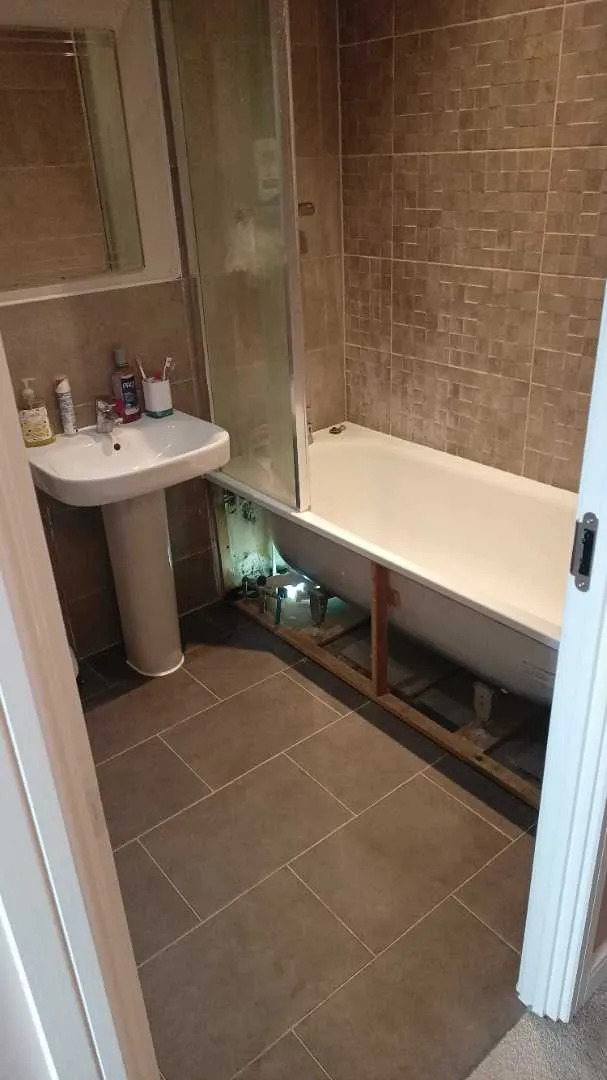
What the tenant notices. The tenant downstairs reports a stain or drip under the bathroom of the flat above. It may appear only when that shower is used, or it may never stop.
How it is found. Moisture mapping, thermal imaging, dye tests on the shower and bath, a borescope camera behind the bath panel, and pressure testing of the hot and cold supplies. The flat above usually needs to be accessible.
What the tenant notices. A swollen kickboard, a damp base unit, laminate lifting beside the washing machine or dishwasher, a smell under the sink.
How it is found. Moisture readings and thermal imaging along the run of units, dye tests on waste connections, and a borescope camera into the void before a cabinet comes out.
What the tenant notices. The tenant keeps topping up the boiler pressure, one radiator stays cold, or a patch of floor feels warm. Heating pipes often run under floors and behind finished walls.
How it is found. Pressure testing to confirm the heating circuit is losing water, thermal imaging to follow the pipe route, then tracer gas or acoustic listening to pinpoint the leak.
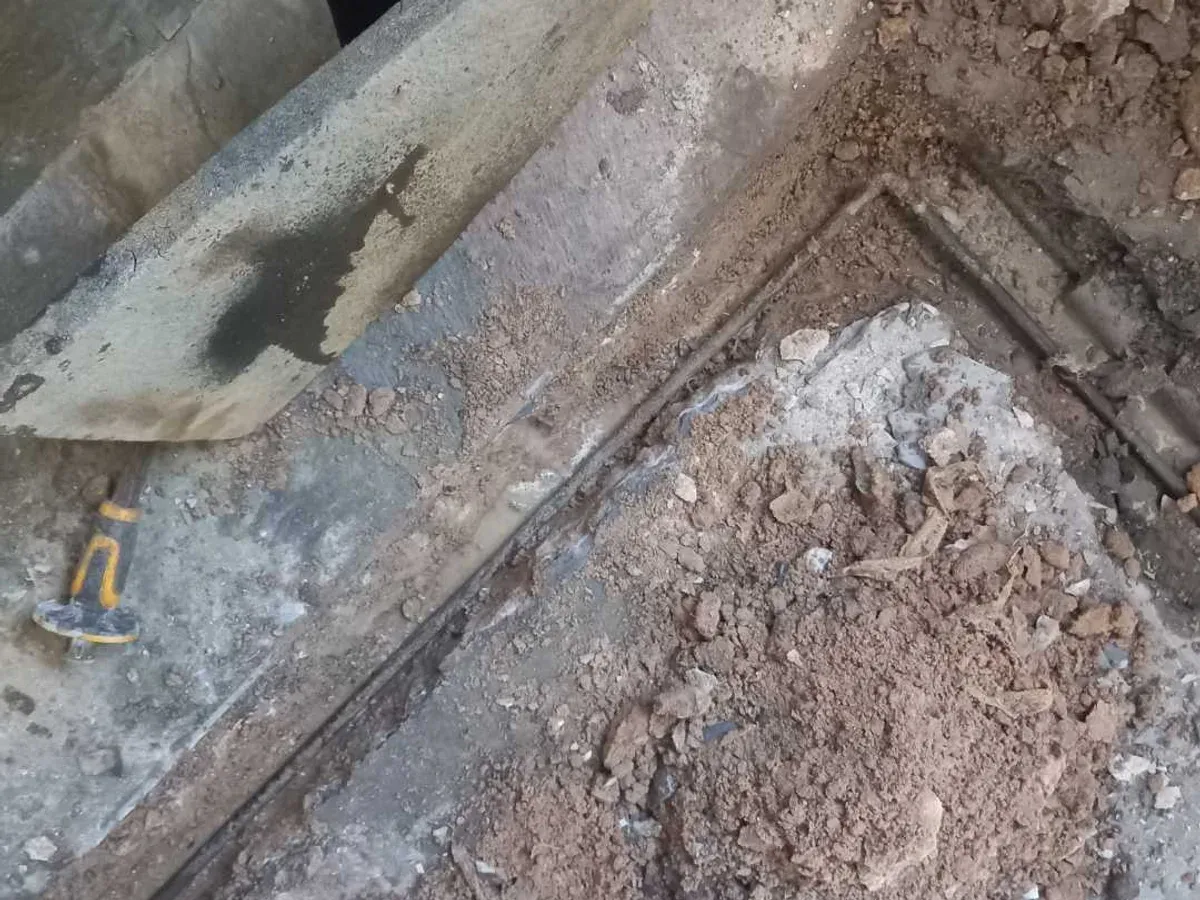
What the tenant notices. Damp flooring or skirting in a hallway or understairs cupboard, and a water meter that keeps turning when every tap is off.
How it is found. A meter check with the stopcock open and closed, each circuit pressure tested on its own, tracer gas and thermal imaging to follow the pipe, then a targeted opening at the marked spot.
What the tenant notices. A water bill that has jumped, a meter that turns with the stopcock closed, low pressure, or a damp patch along the front path. In a converted house the supply may be shared between flats.
How it is found. Acoustic ground microphones and leak-noise correlation along the pipe, tracer gas where the ground is noisy, and a trace wire to map a plastic pipe before a targeted excavation.
ADI’s engineers combine these seven methods to locate hidden leaks before anything in the tenant’s home is opened.
Tracer gas
A safe, non-flammable hydrogen and nitrogen mix is put into the pipe or void. It escapes at the leak, rises through the floor or wall, and a detector picks it up at the surface.
In a rented home: Supply pipes under a front path, hot pipes under a hallway floor, heating pipes under a screed.
Acoustic listening
Ground and pipe microphones amplify the sound of water escaping under pressure. The loudest point is the leak.
In a rented home: Front gardens, pavements and hallway floors over a buried pipe.
Leak-noise correlation
Two sensors clamped to a pipe record the leak noise from either side; the correlator works out how far along the pipe the leak sits.
In a rented home: Long supply pipes to a house or a converted block, where listening alone is slow.
Thermal imaging
A thermal camera shows warm pipes and cold, wet patches behind finished surfaces. It scans large areas quickly and is always paired with another method to confirm.
In a rented home: Heating runs under floors, hot pipes behind walls, the ceiling under a bathroom.
Borescope cameras
A camera on a flexible tube goes through a small, easily made-good hole to look inside a void, behind a bath panel or into a boxed-in pipe.
In a rented home: Looking behind a bath panel or kitchen units before anything larger is opened.
Moisture mapping
Pin and pinless meters read moisture in walls, floors and ceilings. Plotted room by room, the readings show where the water has travelled and where it started.
In a rented home: Showing the landlord how far the water has spread, and which flat it started in.
Pressure testing
Each circuit is isolated and held under pressure. A drop confirms a leak on that circuit; a steady gauge rules it out, and proves a repair afterwards.
In a rented home: Separating the heating, hot and cold pipes, and proving a repair before the tenant uses them again.
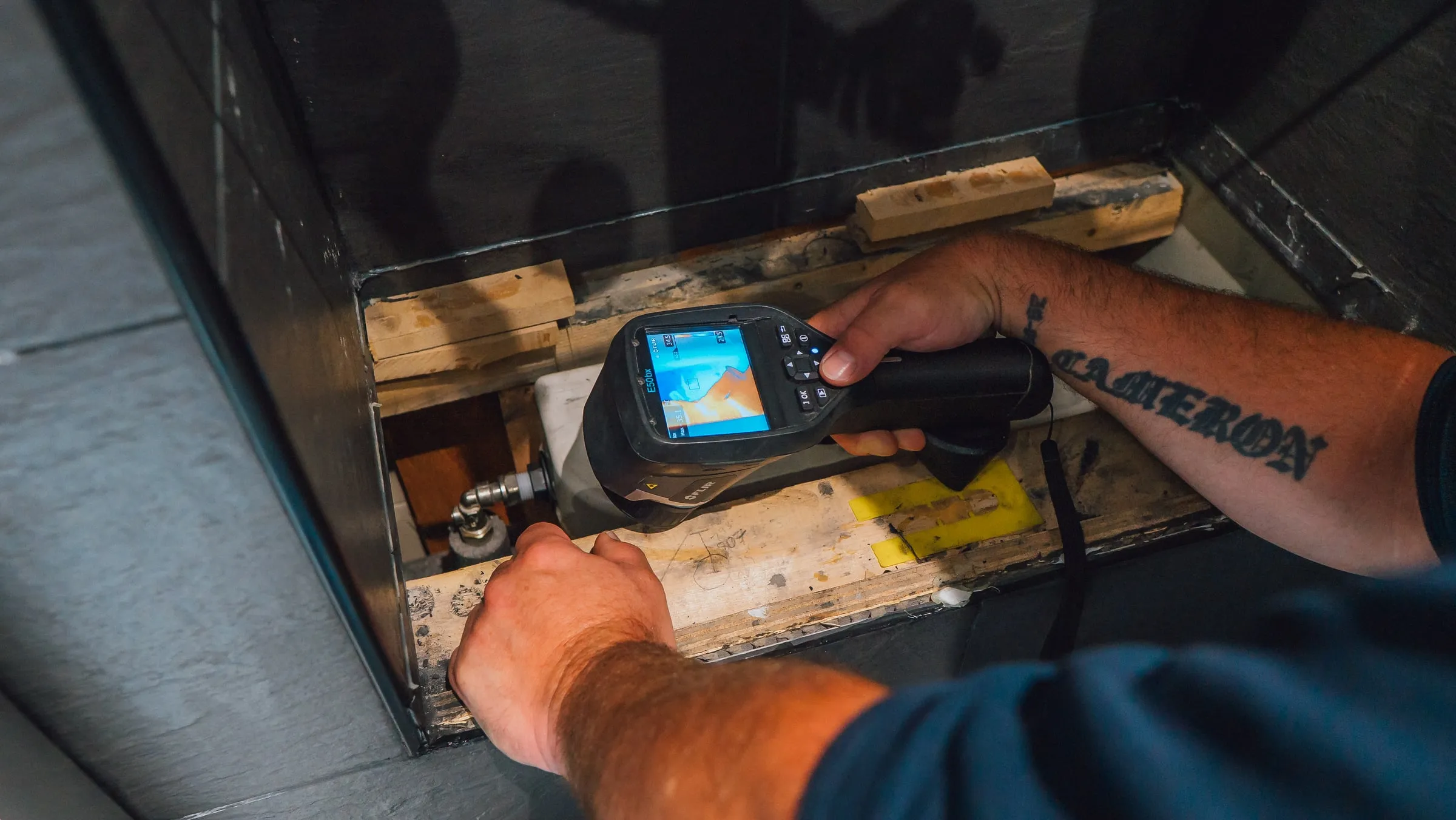
Thermal imaging · Behind a bathroom panel
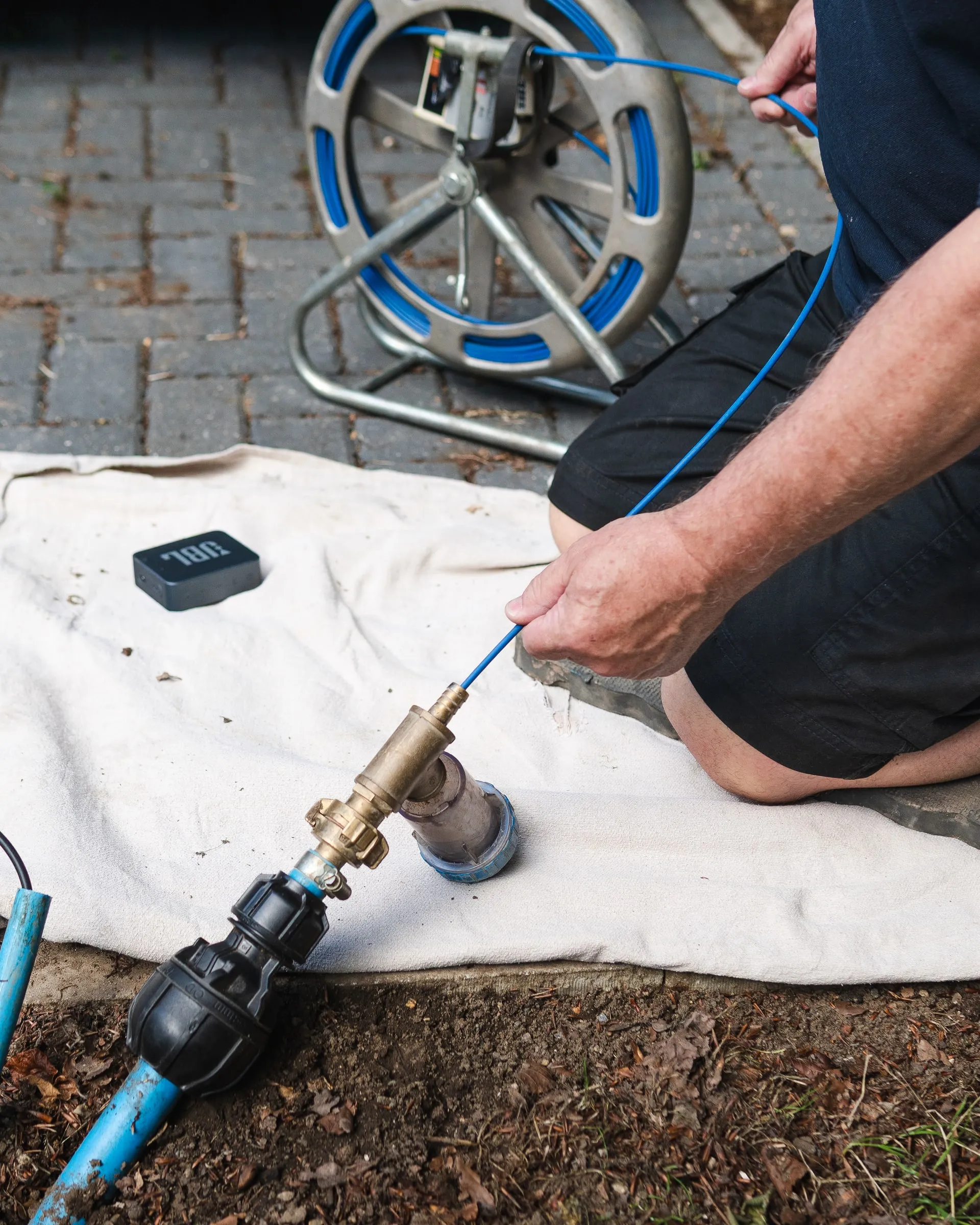
Test connection · Supply pipe
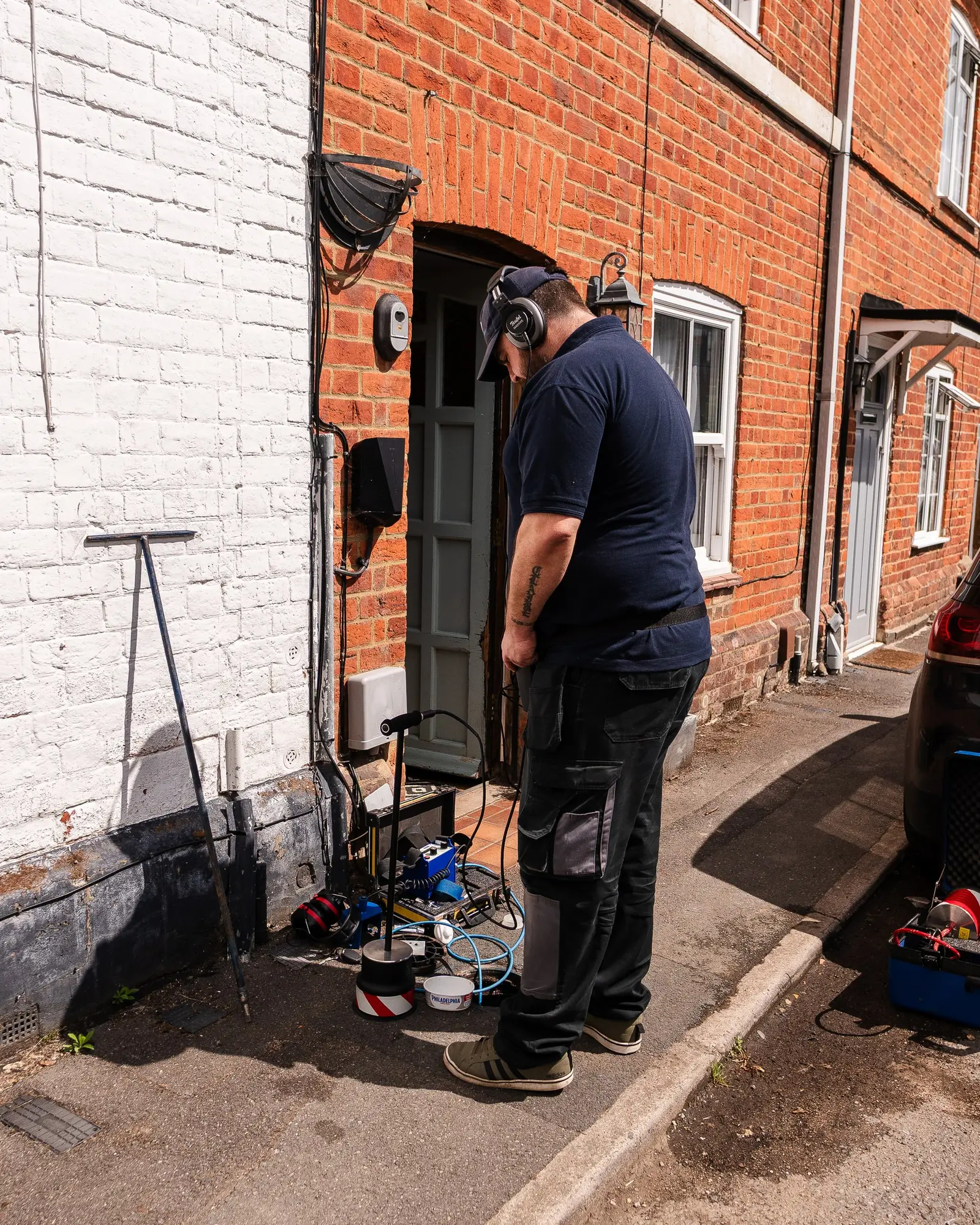
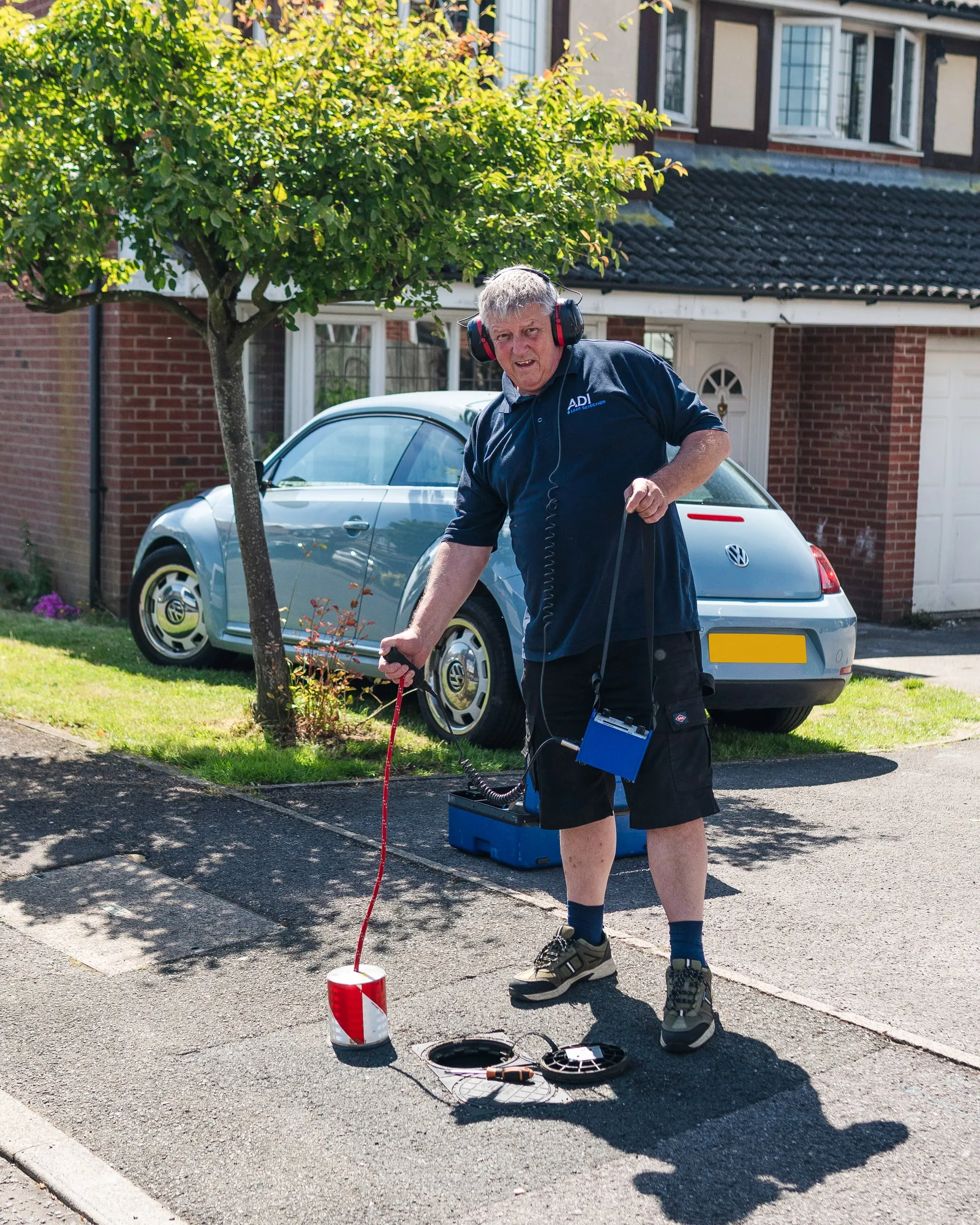
Acoustic listening · Driveway
Leak detection case studies from homes and flats
Three ADI investigations in residential properties, with the findings and repair outcome recorded for each job.
House with a combination boiler · ADI published case
Water was pooling under the stairs and the boiler had been losing pressure for two weeks. Pressure testing, tracer gas and thermal imaging found a damaged 15 mm hot pipe under the hallway floor, plus a separate leaking WC valve.
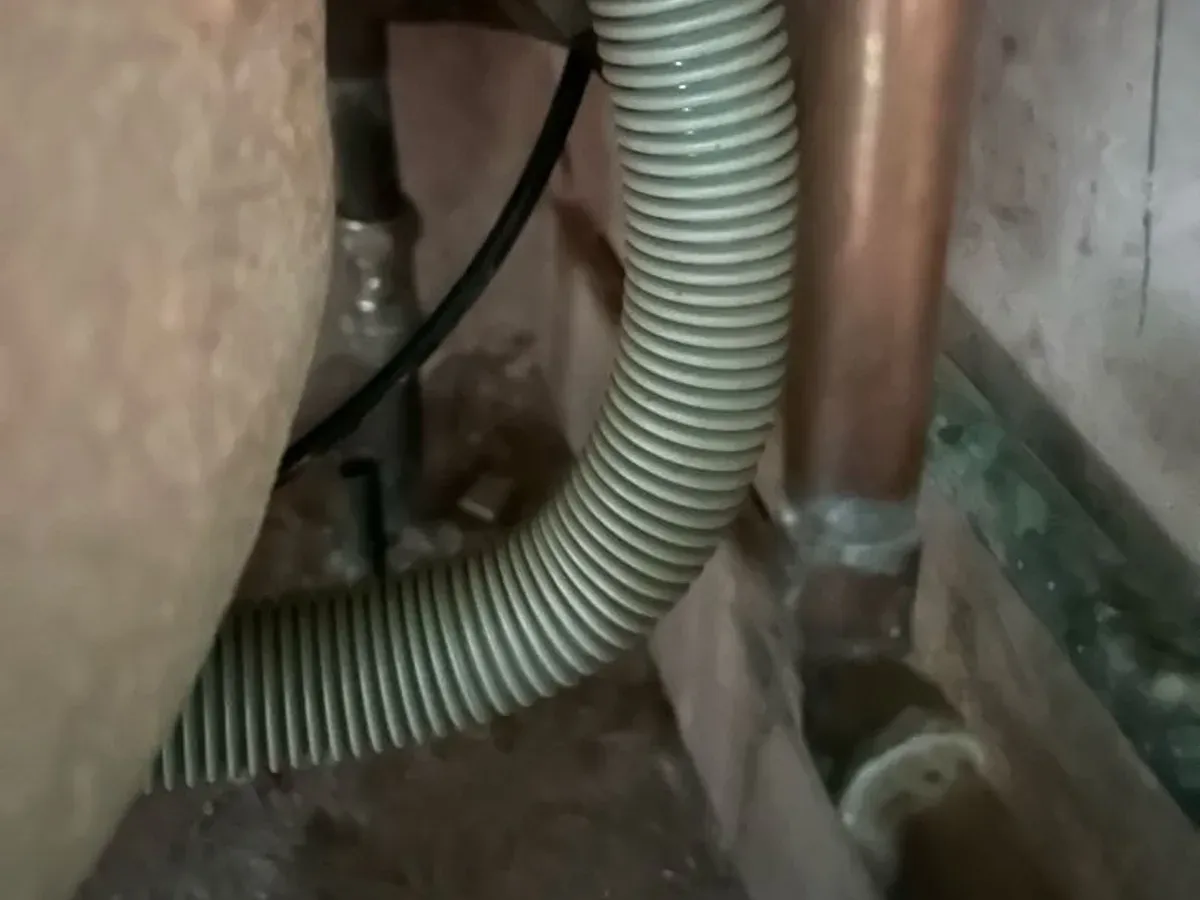
The meter showed a small leak with no water in use. When the flat was converted to a combination boiler, some old hot pipework had been left buried under the bathroom floor, still connected and under pressure.
The tenant reported a leak from the upstairs bathroom, with damage to the ceiling below and saturated skirting. An endoscope, removed panels and one targeted opening led to a leaking shower-mixer connection.
Give the postcode, the type of property, what the tenant has reported and since when. The office team will ask about access and the water and heating system, then give you current availability and a quote.
2
Step 2: You arrange access with the tenant
Agree the time with the tenant and who will let the engineer in. If the flat above or below may be involved, arrange that access too. Parking close to the door matters: the equipment is heavy.
3
Step 3: The engineer arrives
The engineer looks at the meter, the stopcock and the boiler first, then walks the affected rooms with whoever is at the property.
4
Step 4: The survey narrows it down
Pressure testing separates the circuits. Thermal imaging, moisture mapping, acoustics, tracer gas and cameras then close in on the leak. Some tests need the water or heating off for a short while.
5
Step 5: The findings go in writing
A report with photographs, findings and recommendations that you can send straight to the landlord, a contractor or the insurer.
6
Step 6: Repair where it is quoted
Pipework and drainage leaks can be quoted and repaired, often on the same visit, and pressure tested afterwards. Roof and building-fabric leaks are located and reported for a roofer to fix.
I spoke with Lauren and she was amazing from start to finish. I had a lot of questions, particularly because the work was being covered through my home insurance, and she took the time to clearly explain exactly what the engineer would do, how the process worked and what would be covered. She was incredibly knowledgeable, patient and transparent about everything, including the pricing. […] I would highly recommend ADI Leak Detection.
Grant was incredible here in Essex from start to finish. He arrived early, and managed to track down a leak in the bathroom that was making its way through into the kitchen. It turned out there were nails in the pipe! […] He was polite, friendly, clearly very experienced and knew exactly what he was doing. He explained what was happening and dealt with the repair professionally and efficiently. Really impressed with the service and would definitely recommend Grant.
Robert was very thorough and explained what he was doing as he went. He detected and fixed 2 leaks in the outdoor water pipe under our paving. Excellent service.
Booked the engineer over the phone with no issues.. Mathew (the engineer ) arrived on time and was very thorough in his investigation. Leak found and issue sorted very professionally. Would definitely recommend ADI for water leak issues.
A specialist leak detection service from ADI Leak Detection
Letting Agent Leak Detection, a specialist service from ADI Leak Detection. ADI started in 2011 and has more than twenty-five leak investigation engineers across England, Scotland and Wales. An agency with homes in several towns can use one provider and get the same kind of report from every visit.
£5 million public liability insurance. Engineers are qualified and registered plumbers.
Accredited by CIPHE, WIAPS and WaterSafe for plumbing and water regulations.
Reports you can pass on to the landlord, a contractor or the insurer, with photographs, findings and recommendations.
4.7 on Trustpilot from 1600+ reviews, checked 14 September 2026.
Can you find the leak without taking out the bathroom?
Nearly always. The methods are non-invasive: moisture mapping, thermal imaging, dye tests, tracer gas, acoustics and camera inspection narrow the leak to a small area before anything is opened. Some jobs still need targeted access to confirm or repair the fault, and no survey can promise zero disturbance in every property, but we work to keep that to a tile or a panel rather than a room.
Can you survey while the tenant is living there?
Yes. Tell the office the property is occupied when you call. Agree the appointment with the tenant, who will let the engineer in and whether any rooms or cupboards are locked. Some tests need the water or heating off for a short period; the engineer agrees the timing with whoever is at the property.
What if the water is coming from another flat?
Say which rooms and which flats are affected. The engineer may need to get into the flat above, the flat below or a shared cupboard, so arrange that with those occupiers or the block's managing agent before the visit. A stain on a ceiling does not prove which home the leak is in.
Do you repair what you find?
Pipework and drainage leaks can be quoted and repaired, often on the same visit, and pressure tested afterwards. Roof and building-fabric leaks are located and reported for a roofer to fix. Repairs are charged separately from the survey and are quoted before any work starts, so you can get the landlord's approval first.
Will the report work for the landlord and the insurer?
The report is written so you can pass it straight on: photographs, findings and recommendations. Insurers call this work trace and access, and policies differ on what they cover, so ask the landlord's insurer what it needs before the visit and tell the office so the report answers it.
How quickly can an engineer attend, and what does it cost?
Call with the postcode, the property type and what the tenant has noticed. The office team gives you current availability and a quote in the same call. ADI has more than twenty-five engineers across England, Scotland and Wales. We do not promise arrival times or prices on a website without knowing the job.
Arrange a leak detection survey with ADI
Describe what the tenant has noticed, the type of property and the postcode. The office team will talk through the survey, give you a quote and current availability, and book the engineer.